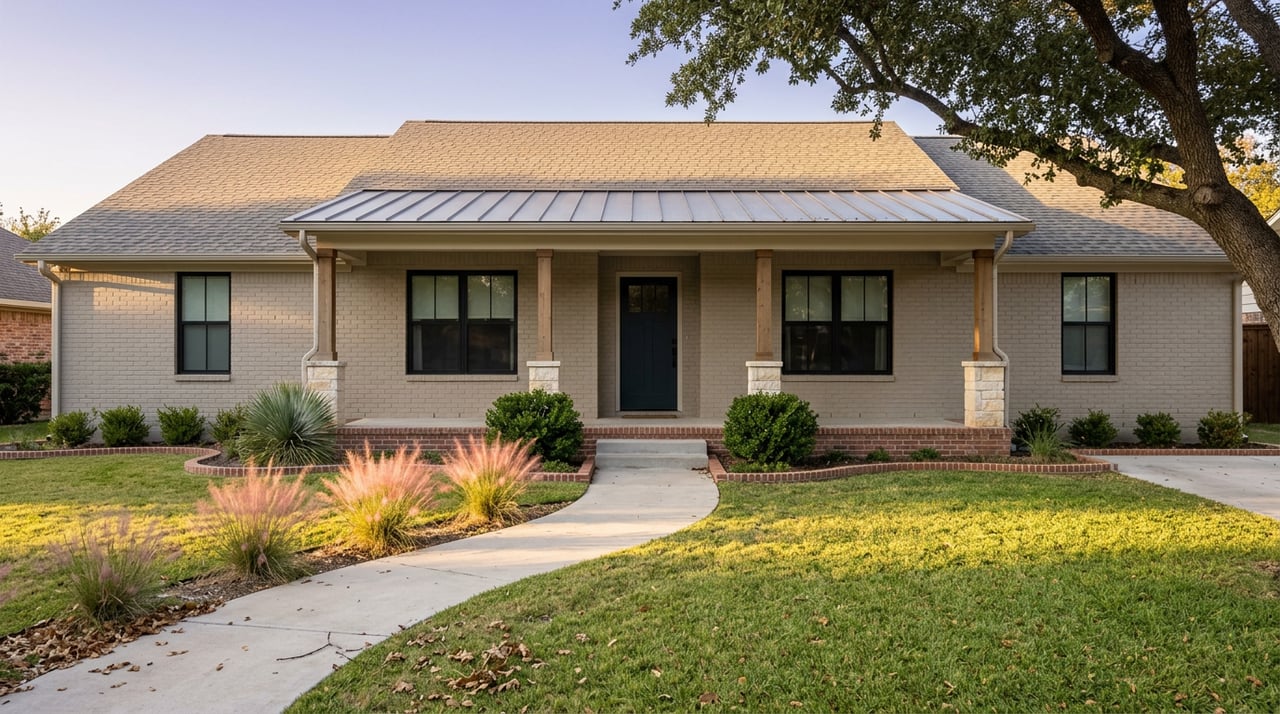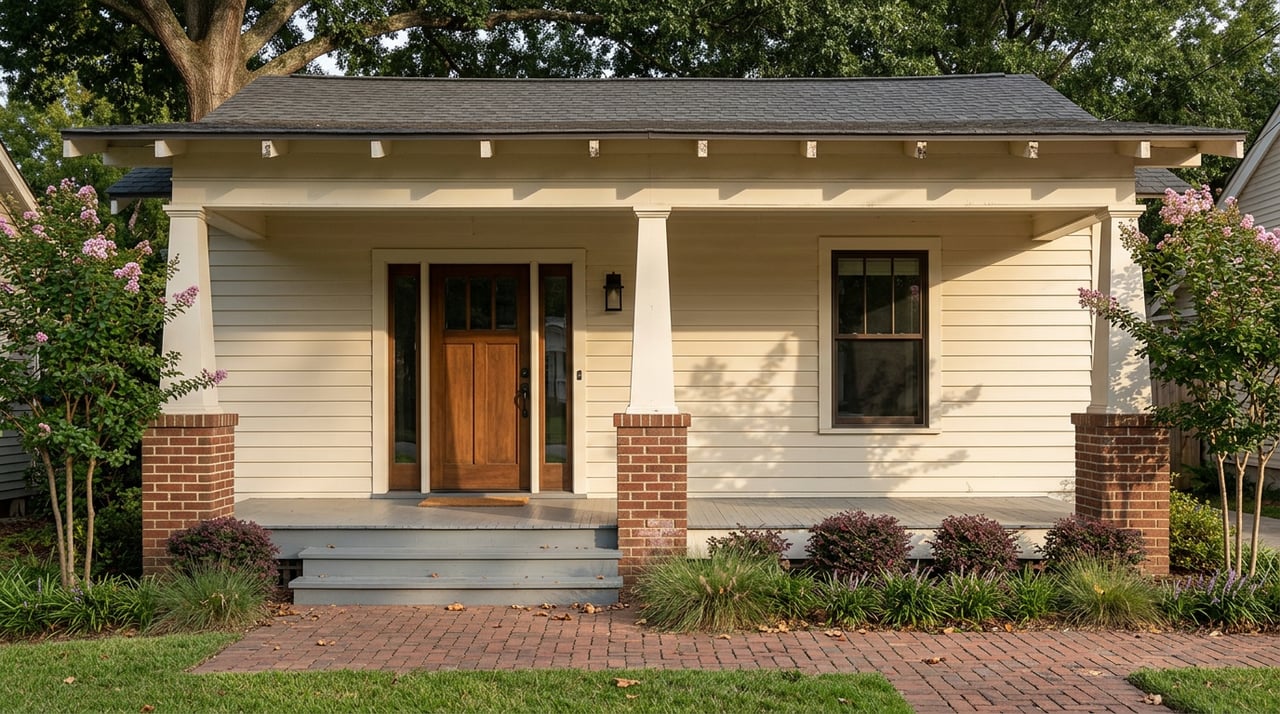
Say a Central Austin listing reads "new construction, 3 bed, $750,000," and the house sits behind a 1940s bungalow on a street where new builds usually start above a million. Is that a bargain? The best answer so far comes from the HOME Impact Report from Unlock MLS and the Austin Board of REALTORS®. It compared 57 homes built under the city's HOME rules and closed in 2025 with 115 traditional single-family new builds that closed in the same year.
The headline from that study is a 53% price gap. Underneath it is a narrower number, and that narrower number explains most of what a buyer will run into on one of these homes, from the deed to the loan to the counteroffer.
The $830,000 gap, divided by square feet
The report, published in April 2026, is the most recent sales study specific to HOME units. It was produced by the local REALTOR® association, which supports the policy. Here are its 2025 medians side by side.
| 2025 closings, City of Austin | HOME new construction | Traditional single-family new construction |
|---|---|---|
| Units analyzed | 57 | 115 |
| Median sale price | $750,000 | $1,580,000 |
| Median size | 1,693 sq. ft. | 3,029 sq. ft. |
| Median bedrooms | 3 | 4 |
| Median closed price per sq. ft. | $477 | $522 |
| Close vs. original list price | -6.1% | -10.6% |
| Median days on market | 32 | 37 |
Look at the price-per-square-foot row. The total price is 53% lower, but the price per foot is only about 9% lower. HOME units are 44% smaller than traditional new builds, and that size difference accounts for nearly all of the $830,000 gap. So a buyer isn't getting urban-core new construction at a discount. They're getting it in a smaller size, at a total price that used to be almost nonexistent close to downtown. The report found that if you leave out one master-planned community outside the core, only 2.0% of traditional new-construction sales in 2025 came in under $500,000.
The last two rows matter at the offer stage. In 2025, HOME sellers closed 6.1% below their original list price, while traditional new-construction sellers closed 10.6% below. HOME units also sold five days faster. A buyer expecting the big list-price cuts common in large new builds had less room to negotiate on these homes. One caveat: that data covers 2025. In August 2026, the Austin-Round Rock metro had 5.1 months of inventory and a $412,000 median sale price, down 6.4% from a year earlier, according to KXAN's housing data tracker. The City of Austin median that month was $560,000. Nobody has published updated HOME numbers to show whether these units are still as tight as they were in 2025.
The report found HOME sales clustered in the urban core, along central corridors from South Congress through East Austin and into the north-central neighborhoods. When Community Impact covered the policy in May, it used a three-unit project in Cherrywood as its example.
Why the lot usually stays in one piece
HOME produces small homes, but it rarely produces small lots, and the reason is in the rules.
HOME Phase 1, with applications accepted since February 5, 2024, lets up to three units go on one SF-1, SF-2 or SF-3 lot. Phase 2 lowered the minimum lot size to 1,800 square feet. To use that smaller minimum, though, an owner whose lot is 5,750 square feet or larger has to file a subdivision application and split it. As of October 6, 2026, the city's dashboard shows 742 Phase 1 applications approved, covering 1,482 new units. Phase 2 has been much slower. As of spring 2026, Community Impact reported about 40 small-lot buildings and roughly half a dozen subdivisions moving forward.
The ABoR report gives the reason directly. In most cases, the cost and time of subdividing make new small lots economically unviable, even where the code allows them. The report also points to impervious cover. When a builder adds attached units, all of them share one lot's allowance, which caps duplex, two-unit and three-unit uses at 45%. On small and mid-size lots, the report says, that pushes builders toward one large detached home and away from several attached ones.
That's why the median HOME property in the 2025 study measured 6,708 square feet. The report notes that figure is the whole lot the project sits on, not each unit's share. In practice, two or three homes on one undivided lot is the typical HOME project. Builders can still sell those homes to separate owners, and the usual tool for that is a condominium regime.
What you're buying when homes share a lot
Neither the city's dashboard nor the ABoR study reports how many HOME units sold as condos and how many sold on their own platted lots. A legal subdivision creates a fee-simple lot. A condo regime creates separate titles without one. The city's 2024 HOME Report tracks the two separately: fee-simple sales, where the owner holds both the land and the structure, and common-ownership sales, often in a condominium regime. So the first question to ask on a HOME listing is which kind of ownership it is.
Under the Texas Uniform Condominium Act, a condo owner holds a defined unit plus an undivided share of the common elements. Fannie Mae's Selling Guide describes a site condo as a detached unit whose owner holds both the unit and the land it sits on. That holds even for two detached houses on one lot. The statute requires several pieces to exist, and each one is a document to read before the option period runs out:
- The declaration. It defines each unit, each owner's allocated interest and the use restrictions.
- The owners' association. It has to be formed as a corporation, every unit owner is a member, and it can adopt bylaws, budgets, assessments and rules. In a two-unit project, that board is you and your neighbor.
- The plat or plans and the common-element allocation. These show who owns, and who maintains, the driveway, the yard between the houses and the utility runs.
- The insurance split. The association's policy covers insurable common elements and liability. Your lender may require you to carry coverage on your own unit as well.
None of this is unusual for a condo. It's just unexpected in a deal that, from the street, looks like buying a house.
The loan question depends on how many units share the lot
How the home is financed follows from that same shared-lot structure. Fannie Mae's Selling Guide, in a section dated August 2026, waives the condo project review for detached units, including site condos, and for units in two-to-four-unit projects. The property, appraisal and insurance requirements still apply. For a conventional loan, then, a small HOME condo doesn't trigger the full project review that a large condo building would.
FHA works differently. HUD's condominium guidance says Single-Unit Approval, the route FHA buyers use in condo projects that aren't approved, isn't available for projects with fewer than five units. HUD does allow FHA loans in FHA-approved projects. A buyer planning to use FHA on a two- or three-unit HOME condo should ask the lender early whether that specific project qualifies, before the option period starts.
A city permit doesn't settle the covenant question
The city's deed restrictions page says private deed restrictions run with the land and remain enforceable regardless of zoning changes. The city has to approve a permit that meets code even when the project conflicts with a covenant, and enforcing the covenant is left to the private parties named in it. The city's HOME page says the same thing: confirming covenants is the applicant's responsibility.
Central Austin has recent examples. The Austin Bulldog reported that in 2023, Bryker Woods homeowners sued and stopped a home planned for a 4,200-square-foot city-owned lot, because their covenant required at least 5,750 square feet for a single residence. The same outlet reported in 2025 that Allandale residents raised covenant concerns about HOME. In South Austin, the Austin Monitor covered an Elm Wood Estates case. A developer cited HOME while seeking eight homes in a subdivision whose 1953 restrictions limited lots to two, and the homeowners won at district court.
For a buyer, that means a city permit doesn't answer the covenant question. The title commitment and the recorded restrictions answer it, and a title company or real estate attorney is the right person to read them for you.
What council asked staff to change in May
On May 7, 2026, City Council passed Council Member Krista Laine's HOME cleanup resolution 9–1. "HOME is working, and we owe it to our city to enable it to do the most efficient and effective work possible," Laine said, as quoted by Community Impact. The resolution asks staff to reduce lot width and side-yard requirements, simplify the rules for porches and garages, make clear that two homes are allowed on 3,600-square-foot lots, and improve the subdivision process for larger lots. If those changes make subdividing cheaper, more HOME homes could sell on their own fee-simple lots. That's the shift to watch for in the condo-versus-house question.
FAQ
Is a HOME unit always a condo? No. A unit sits on its own fee-simple lot when the land has been legally subdivided or the lot was already under 5,750 square feet. When several units share one undivided lot, a condo regime is the common way to give each owner a separate title. The title documents show which one you're looking at.
Does the 2025 data show what HOME units cost today? It shows what 57 units sold for in 2025. It's the most recent study focused on HOME sales. Prices and days on market in the broader metro have shifted since then, so the 2025 medians are a reference point, not a quote.
Why was the median HOME lot bigger than 1,800 square feet? The 6,708-square-foot median is the whole property, which is often shared by two or three units. Splitting it into small lots requires a subdivision, and the ABoR report calls that process too costly to work in most cases.
If you're looking at a HOME listing in Central Austin, Better Broker, Texas Realty can go through the declaration, the plat and the recorded restrictions with you before your option period starts. We can also compare the price per square foot against nearby new builds, so you know whether you're paying for less space or for a lower rate.
This article is general information, not legal, tax or financial advice. Consult a qualified professional about your situation.