Pull up three different sites for Georgetown home prices this week and you'll get three different stories. Zillow's tracker, updated August 31, 2026, puts the average home value at $420,930, down 4.3% over the past year. HAR.com's September 2026 figure shows an average price of $537,635. Redfin's three-month window through August 2026 has Sun City Texas alone at a $387,000 median, up 8.5% year over year. None of these numbers are wrong. They're measuring different things, and the gap between them is the actual story worth understanding before you compare Georgetown to anywhere else in Central Texas.
The confusion isn't a data error. It's a mechanical fact about how a citywide median gets built, and Georgetown is one of the clearest places in the region to watch it happen in real time.
What a Median Actually Counts
A median sale price isn't a valuation. It's the midpoint of whatever homes happened to close in a given window. If a wave of lower-priced new construction closes all at once, the citywide median drops, even if not a single existing homeowner's equity moved. If luxury resales dominate a slow month, the median jumps. The number tracks transaction mix, not home value.
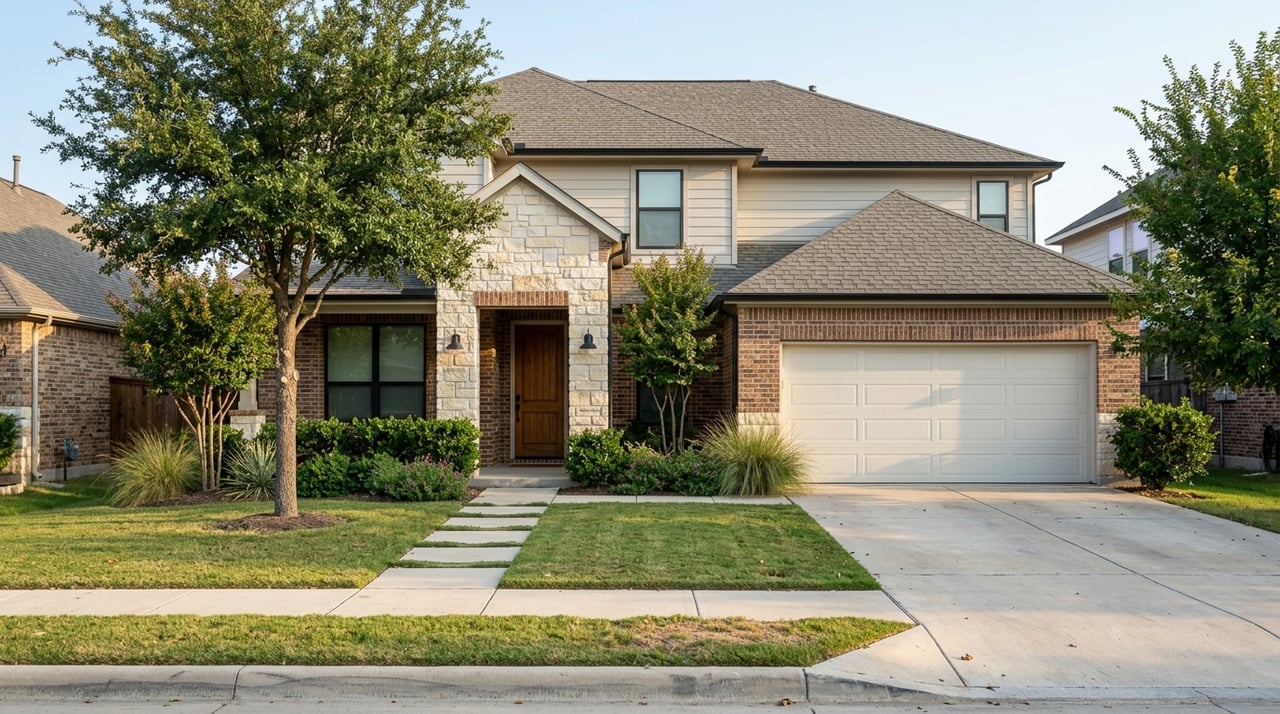
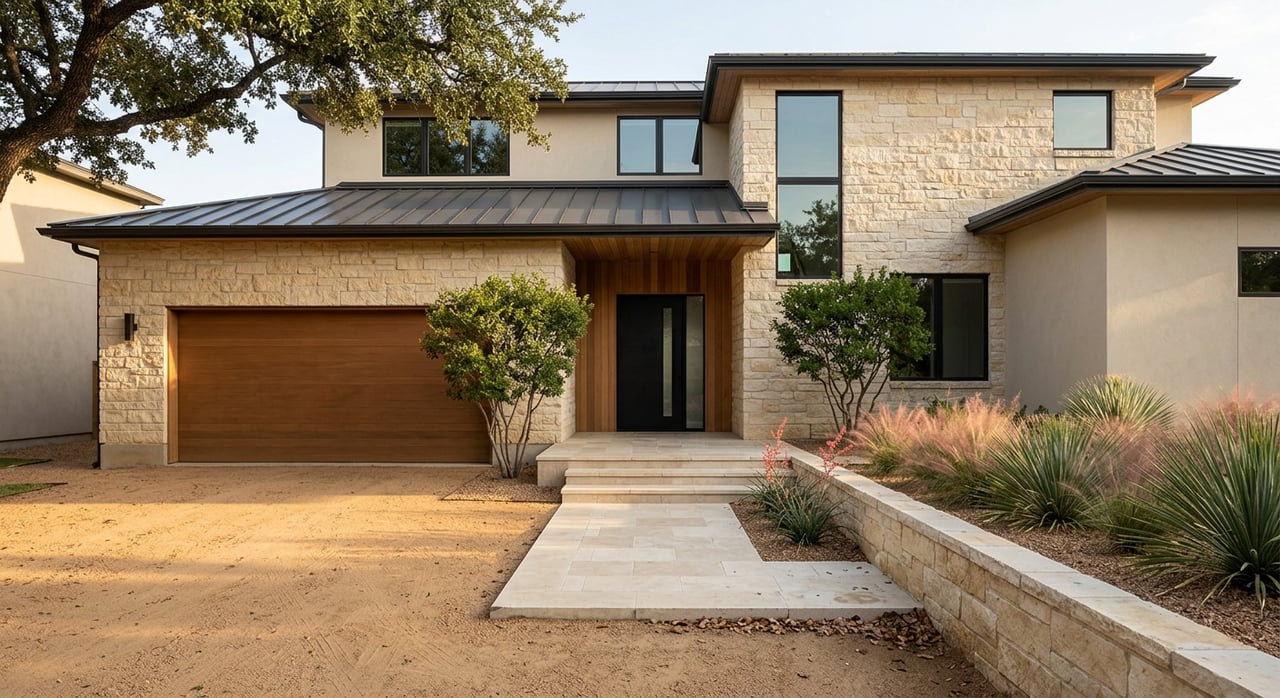
Georgetown is a useful case study because it has three large, distinct pricing segments closing in the same MLS at the same time: entry-level new construction in communities like Morningstar, a broader range in Wolf Ranch that skews toward its lower-priced sections, and steady resale turnover inside the 55-plus Del Webb community Sun City Texas, where homes have recently traded in roughly the $300,000 to $450,000 band. When builders push a batch of spec inventory to closing in any of these communities, the citywide number moves without a single established neighborhood losing value.
That's exactly what happened earlier this year. Georgetown's reported median sale price fell from roughly $490,000 in February 2025 to around $405,000 to $411,000 in February 2026, depending on which data source you check, a headline drop of about 17%. Full-year 2025 data told a much calmer story: a median of $454,859, down modestly from 2024's $465,781. The apparent one-year cliff was almost entirely a volume surge in lower-priced closings, not a broad reset in what homes are worth.
Sun City Moves the Whole City's Number
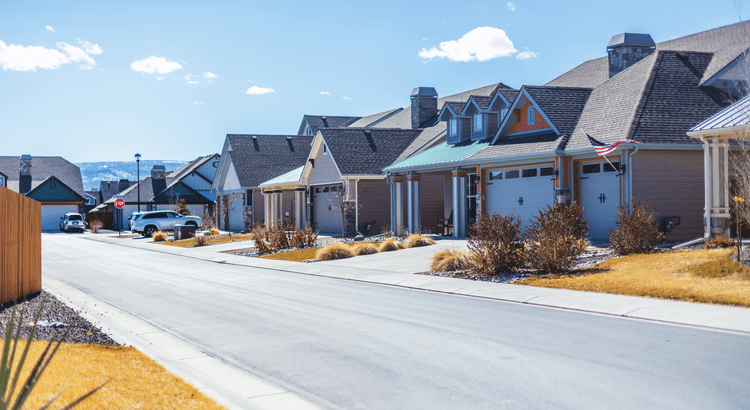
Sun City Texas isn't a subdivision on the edge of Georgetown's market. It's a fifth of it. The community has grown from an initial 522 homes in 1996 to roughly 8,500 homes today, and its share of Georgetown's total population rose from about 4% in 1996 to roughly 20% by 2020. When a neighborhood that size has an active month, the citywide median feels it.
Sun City's own numbers, drawn from trailing 12-month MLS data through September 2026, show 565 homes closed at a median sold price of $382,000 and an average of $417,044. As of that same window, 150 homes sit actively listed at a median list price of $342,000, with another 54 under contract. Compare that to the list-versus-sold gap in a typical family neighborhood and you can see how much pull Sun City's resale volume has on any citywide average, simply because of how many transactions it contributes every month.
Sun City also isn't a like-for-like comparable if you're pricing a family home in Wolf Ranch or evaluating a rental strategy. It's an age-restricted community: at least one member of each household must be 55 or older to buy in. That covenant structure changes both the buyer pool and the exit strategy. It is not a conventional rental play, and buyers considering Sun City for investment purposes should work through the occupancy covenants with a local advisor before assuming the numbers work the way they would in a standard subdivision.
The Tax Line Austin Transplants Often Miss
Buyers comparing Georgetown to Austin-proper suburbs frequently anchor on the sale price and skip the recurring cost that actually shows up every year. Williamson County's overall property tax rate runs at approximately 1.78%, meaningfully lower than Travis County, where combined rates commonly land between 2.1% and 2.3%. On a $370,000 home, that gap works out to roughly $1,200 to $1,900 in annual property tax savings, a real number that changes the monthly payment math even when two homes carry the identical sale price.
For investors, the same county line shows up in yield. Georgetown currently sits in the 4.5% to 5.5% cap rate range for single-family rentals, lower than Hays County but competitive with Cedar Park and Round Rock inside Williamson County's western tier. That's a useful benchmark if you're weighing Georgetown against a neighboring suburb purely on cash flow rather than price appreciation.
Reading the Number Correctly
None of this means Georgetown's pricing data is unreliable. It means the headline median answers a narrower question than most readers assume. A few adjustments make it more useful:
- Ask which subdivisions are driving that month's closings before reacting to a citywide swing. A builder pushing spec inventory in Morningstar or Wolf Ranch's entry-level sections can move the average without touching resale values in established neighborhoods.
- Compare price per square foot within a single subdivision, not across the whole city. Georgetown's citywide per-square-foot figure blends brand-new one-story Del Webb product with two-story family homes built a decade apart, which are not interchangeable.
- If Sun City is part of your comparison set, separate it out entirely. Its 55-plus covenant and finite new-supply pipeline give it a different appreciation pattern than family-zoned communities, and that segment's strong performance in supply-constrained years is a distinct story from the rest of the city.
- Factor the county tax line into any Georgetown-versus-Austin comparison before the sale price alone tells you which is the better value.
FAQ
Does Sun City's median price tell me what I'd pay in a family-zoned Georgetown neighborhood? No. Sun City is a separate, age-restricted segment with its own supply pipeline and buyer pool. Its median moves independently of neighborhoods like Wolf Ranch's non-restricted sections or established in-town streets near the historic square.
Is Georgetown actually getting cheaper right now? Not in a way that reflects individual home values. Recent swings in the citywide median have tracked which subdivisions closed the most volume that month, particularly new-construction activity in Morningstar and Wolf Ranch's lower-priced phases, rather than a broad decline in what specific homes are worth.
Can I buy in Sun City as a rental property? The 55-plus occupancy covenant limits who can legally reside in the home, which restricts most conventional rental strategies. Anyone considering Sun City for investment purposes should review the community's specific covenants with a local advisor before assuming standard landlord math applies.
If you're trying to figure out what a specific Georgetown subdivision is actually doing right now, rather than what the citywide average says, that's a conversation worth having before you write an offer or set a list price. Better Broker, Texas Realty can walk through the numbers for your street, not just the city.